In the crowded landscape of summer 2026 anime premieres, few shows promise to upend expectations quite like Kaiju Girl Caramelise. From its very first episode, titled “The Kaiju Girl Appears in Tokyo,” this adaptation of Spica Aoki’s long-running manga delivers a fresh, emotionally resonant take on the romantic comedy genre by injecting it with literal monster mayhem. Viewers are treated to a story that is equal parts tender coming-of-age tale, awkward teen romance, and over-the-top kaiju spectacle.
Kuroe Akaishi is a high school girl who simply wants to blend into the background. Burdened by a mysterious, incurable condition that causes monstrous physical transformations when her emotions run high, she has learned the hard way that connection brings only rejection and fear. Yet when the popular and seemingly perfect Arata Minami begins showing genuine interest in her, Kuroe’s carefully constructed walls start to crack—along with her control over the beast within. Episode 1 masterfully sets up this central conflict, blending slice-of-life school drama with explosive supernatural elements in a way that feels both familiar and exhilaratingly new.
This blog post dives deep into the episode’s narrative, characters, themes, production values, and broader cultural context. Whether you’re a longtime fan of the manga or a newcomer drawn in by the buzz, prepare for a thorough exploration of why this premiere stands out as one of the most promising romantic comedies of the season.
Understanding the Premise: A Kaiju Condition Rooted in Emotion
At its core, Kaiju Girl Caramelise revolves around a simple yet brilliant metaphor made literal. Kuroe’s “illness” manifests as grotesque changes—spikes, scales, or full-scale kaiju transformation—triggered primarily by embarrassment, excitement, or romantic feelings. This is not mere superpower activation; it is a visceral representation of the internal chaos of adolescence, particularly the vulnerability that comes with opening one’s heart.
In Episode 1, we witness Kuroe’s daily life as an outcast labeled “Psycho-tan” by her classmates. She avoids social interaction, sketches in grayscale (a poignant visual cue for her muted emotional world), and relies on heavy metal music to calm her nerves. Her condition traces back to childhood, when a simple act of affection toward a crush resulted in horror and lifelong isolation. This backstory, efficiently conveyed through flashbacks and internal monologue, grounds the supernatural premise in relatable human pain.
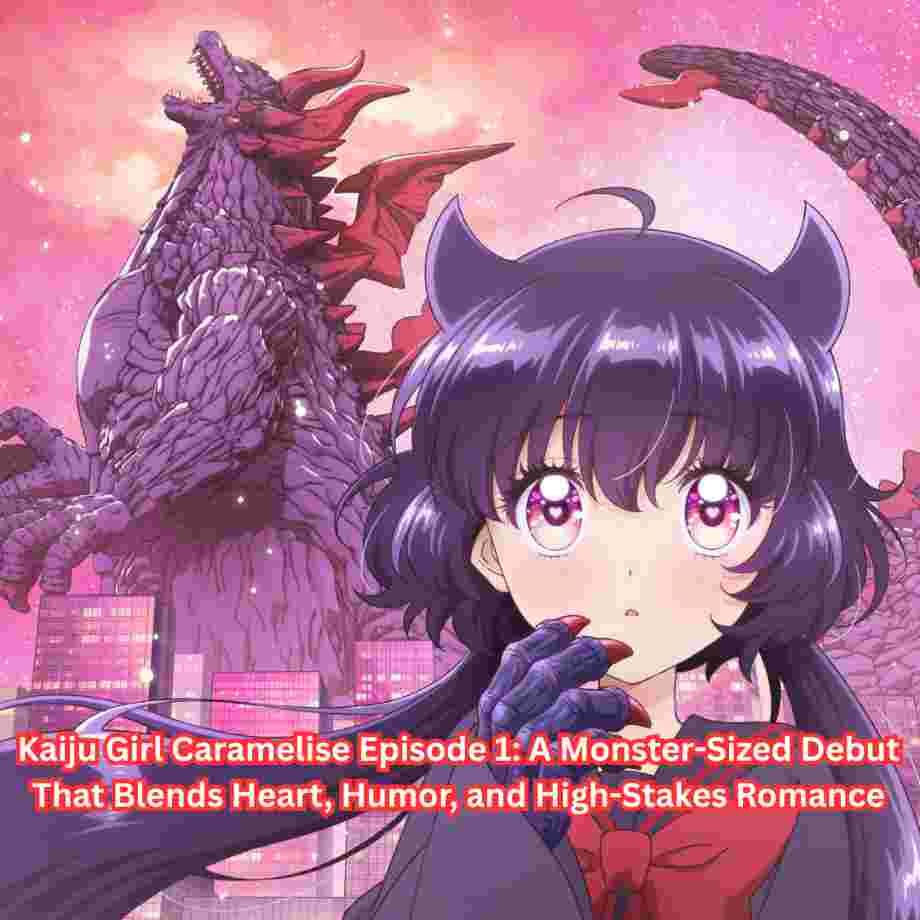
The kaiju form itself—later revealed in full glory as something resembling a towering, heart-accented Godzilla-like entity named Harugon—serves as both curse and hidden truth. Early partial transformations (a monstrous hand here, spikes there) build tension expertly, culminating in the episode’s climax. The condition is portrayed not as a cool power but as a deeply embarrassing and terrifying affliction that threatens Kuroe’s desire for normalcy. This approach elevates the series beyond typical transformation tropes seen in magical girl or body-horror anime.
Character Introductions: Kuroe, Arata, and the Supporting Cast
Kuroe Akaishi emerges as an instantly compelling protagonist. Voiced by Hikari Senga, her performance captures a perfect balance of quiet resignation, defensive sarcasm, and fluttering vulnerability. Kuroe is not a typical shy heroine; she actively pushes people away with abrasive tactics born from self-preservation. Her internal struggles—fear of rejection, longing for acceptance, and the crushing weight of secrecy—feel authentic. The grayscale art motif in her sketches beautifully symbolizes her worldview until Arata’s influence begins to introduce color, both literally and figuratively.
Arata Minami, voiced by Daishi Kajita, subverts the “popular hot guy” archetype. While he is indeed the school idol pursued by a clique of mean girls, he reveals layers of dissatisfaction with his own image-obsessed life. His pursuit of Kuroe feels genuine rather than contrived, sparked by an appreciation for her authenticity amid a sea of superficiality. In Episode 1, he tricks her into a pancake date (her favorite comfort food), showcasing a playful, thoughtful side that contrasts with Kuroe’s assumptions about him. Their chemistry crackles with awkward tension, promising rich development ahead.
Supporting characters add depth quickly. Kuroe’s mother, Rinko Akaishi (Kotono Mitsuishi), is a devoted, protective figure with a mysterious past tied to the kaiju origins. Her dog, Jumbo King, provides comic relief and crucial aid during the climax. The antagonistic group of girls highlights themes of jealousy and social cruelty, while early hints at future friends like Manatsu Tomosato (a kaiju enthusiast) tease a supportive found family.
Episode Breakdown: Key Scenes and Pacing
Episode 1 wastes no time establishing Kuroe’s isolated routine before introducing disruption via Arata. School scenes efficiently depict bullying and her coping mechanisms. The pivotal pancake “date” serves as both romantic highlight and tension builder—Kuroe’s growing feelings cause subtle transformations she desperately hides.
The confrontation with the mean girls escalates emotions, leading Kuroe to flee. A bridge-side breakdown results in her hand destroying the railing, a fall into the river, and the full emergence of her kaiju form. The panic in Tokyo, military response, and her mother’s intervention create a thrilling, high-stakes sequence that balances spectacle with Kuroe’s disoriented perspective. She experiences the rampage with confusion and hurt, underscoring the tragedy beneath the chaos.
Pacing is excellent: quiet character moments build to explosive action, with sharp comedic timing (chibi expressions, internal screams) preventing the drama from becoming overwhelming. The episode clocks in as a strong hook, ending on a note that teases further revelations about Kuroe’s true nature.
Production Excellence: Animation, Direction, and Sound
LIDEN FILMS delivers top-tier work under director Teruyuki Omine and series composer Yuniko Ayana. Fluid animation shines in transformation sequences, with dynamic camera work, detailed kaiju design (courtesy of Hiroyuki Taiga), and expressive character faces capturing every nuance of embarrassment or affection. Purple energy effects and heart motifs add visual flair without overwhelming the grounded school setting.
Backgrounds evoke everyday Tokyo life effectively, contrasting sharply with the monster destruction. Sound design amplifies impact: heavy metal cues for calming, orchestral swells during transformations, and voice acting that conveys raw emotion. The opening theme “Otome Kaijū” by METANICK and ending by HoneyWorks feat. HaKoniwalily perfectly encapsulate the series’ blend of energetic pop and heartfelt sentiment.
Themes and Deeper Analysis: Self-Acceptance, Identity, and Love
Kaiju Girl Caramelise Episode 1 excels by treating its fantastical premise with emotional sincerity. Kuroe’s condition metaphorically represents anxiety, body dysmorphia, mental health struggles, and the fear of being “too much” for others. Her grayscale existence reflects depression and withdrawal, while Arata’s acceptance hints at the healing power of genuine connection.
The episode touches on societal pressures: Kuroe’s bullying mirrors real-world ostracization of those who are different, while Arata’s popularity underscores the loneliness of fitting an idealized mold. Later manga developments (revealing Kuroe’s kaiju origins) promise explorations of nature versus nurture and found identity, but Episode 1 lays strong foundations.
Comparisons to works like My Monster Secret (supernatural rom-com secrecy), Kaiju No. 8 (kaiju action with personal stakes), or even Sailor Moon (hidden identity and growth) are apt, yet Kaiju Girl Caramelise carves its niche through its focus on romantic vulnerability and monster-as-self metaphor. It avoids cheap fanservice or gore, prioritizing heart and humor.
Reception and Cultural Impact
Early reactions praise the episode as a standout premiere, with fans highlighting animation quality, character writing, and the unique rom-com twist. Social media buzz, reaction videos, and discussions on platforms like Reddit emphasize its potential as a top-tier seasonal romance. The manga’s positive critical reception (B+ ratings, ALA recommendations) bodes well for the adaptation’s fidelity and appeal.
In a broader context, the series taps into ongoing interest in kaiju media (Godzilla legacy) while appealing to shoujo and seinen audiences. Its exploration of neurodivergence-adjacent themes and self-love resonates in contemporary discussions around mental health.
Practical Viewing Tips and Recommendations
For first-time viewers:
- Watch on Crunchyroll for official subtitles and high-quality streams.
- Pay attention to visual cues like color shifts and heart motifs—they foreshadow emotional and plot developments.
- If you enjoy the premiere, read the manga (available via Yen Press) for deeper lore and character arcs.
- Pair with similar titles: Toradora!, Kimi ni Todoke, or kaiju-flavored action like Pacific Rim for thematic overlap.
Potential Challenges: The rapid shift from slice-of-life to kaiju action may surprise some, but it pays off. Later episodes are expected to delve into heavier revelations, so emotional investment is key.
FAQ
Is Kaiju Girl Caramelise suitable for all ages? It features mild violence (kaiju destruction) and emotional themes but remains relatively tame, focusing on comedy and romance. Best for teens and up.
How faithful is the anime to the manga? Episode 1 closely adapts early chapters while enhancing visuals. Future episodes should maintain the source’s charm.
Will there be more romance or action? Both—expect escalating romantic tension intertwined with kaiju incidents and identity exploration.
Who should watch this? Fans of unconventional romances, monster stories, or character-driven anime seeking heart and laughs.
Conclusion: A Promising Start to a Monster Love Story
Kaiju Girl Caramelise Episode 1 succeeds spectacularly by introducing a protagonist worth rooting for, a love interest with substance, and a premise rich with thematic potential. It balances heartfelt introspection with thrilling spectacle, proving that even in a genre saturated with tropes, fresh execution can create something special. Kuroe’s journey from isolation to tentative connection—monster and all—promises profound growth, laugh-out-loud moments, and heartfelt romance in the episodes to come.
As the series continues its weekly run, it has the potential to become a standout of Summer 2026 and a beloved entry in the anime canon. For anyone craving a story about embracing your true self, no matter how monstrous it may seem, this is essential viewing. Dive in, and let the kaiju-sized feelings take over.